Discovery & Stakeholder Alignment
The project began with structured stakeholder interviews to surface business goals, pain points, and success metrics. Understanding organizational priorities early allowed me to frame the design process around outcomes rather than aesthetics.
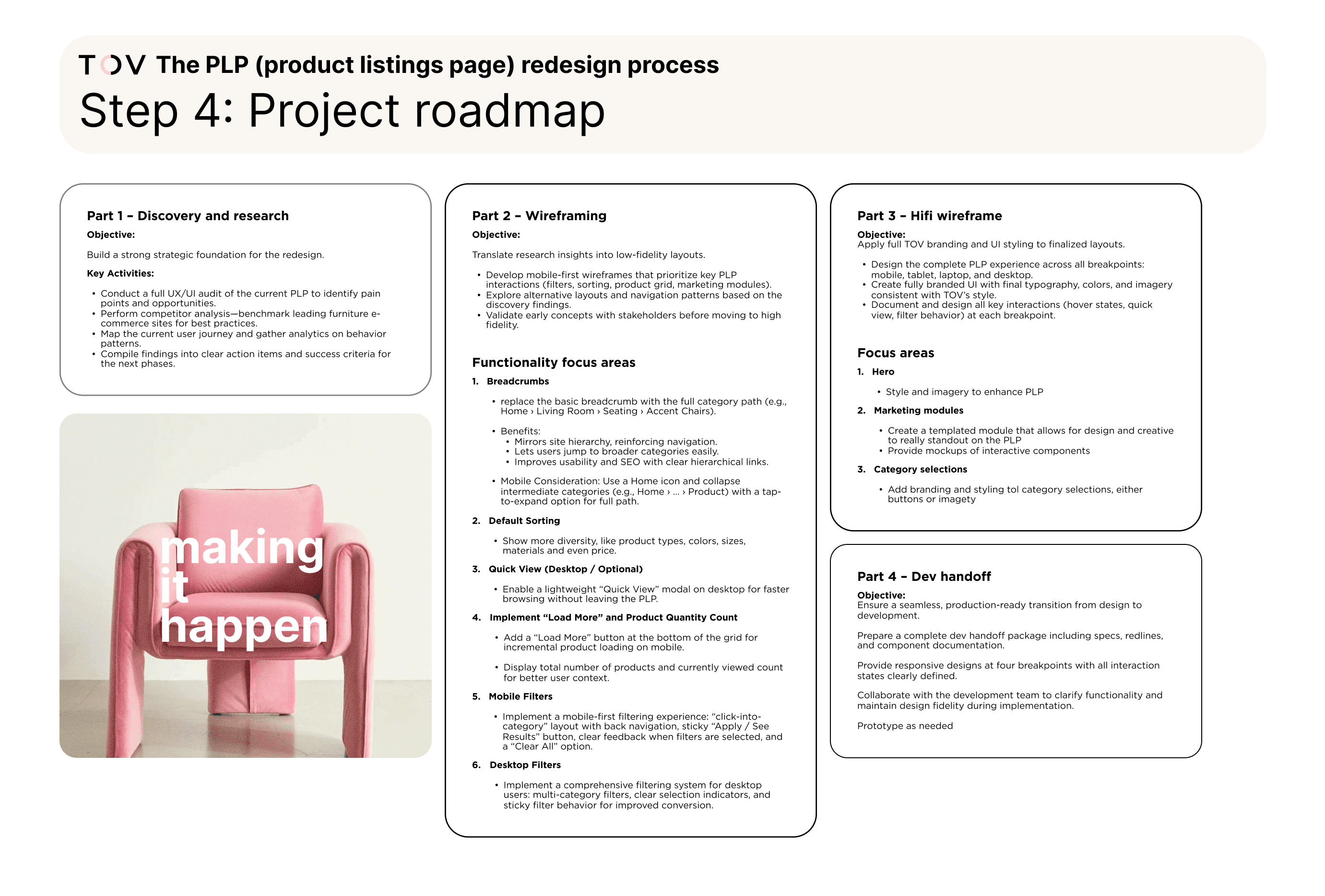
From those sessions, I established a four-phase execution framework; Research & Audit, Wireframing, High-Fidelity Design, and Development Handoff, and developed a project roadmap and timeline that was shared with stakeholders before any design work began. This created alignment, set expectations, and gave the team a clear throughline from discovery to delivery.
The research and audit phase that followed was led entirely by me, as well as design execution and development guidance with the engineering team throughout.
UX Audit & Behavioral Analysis
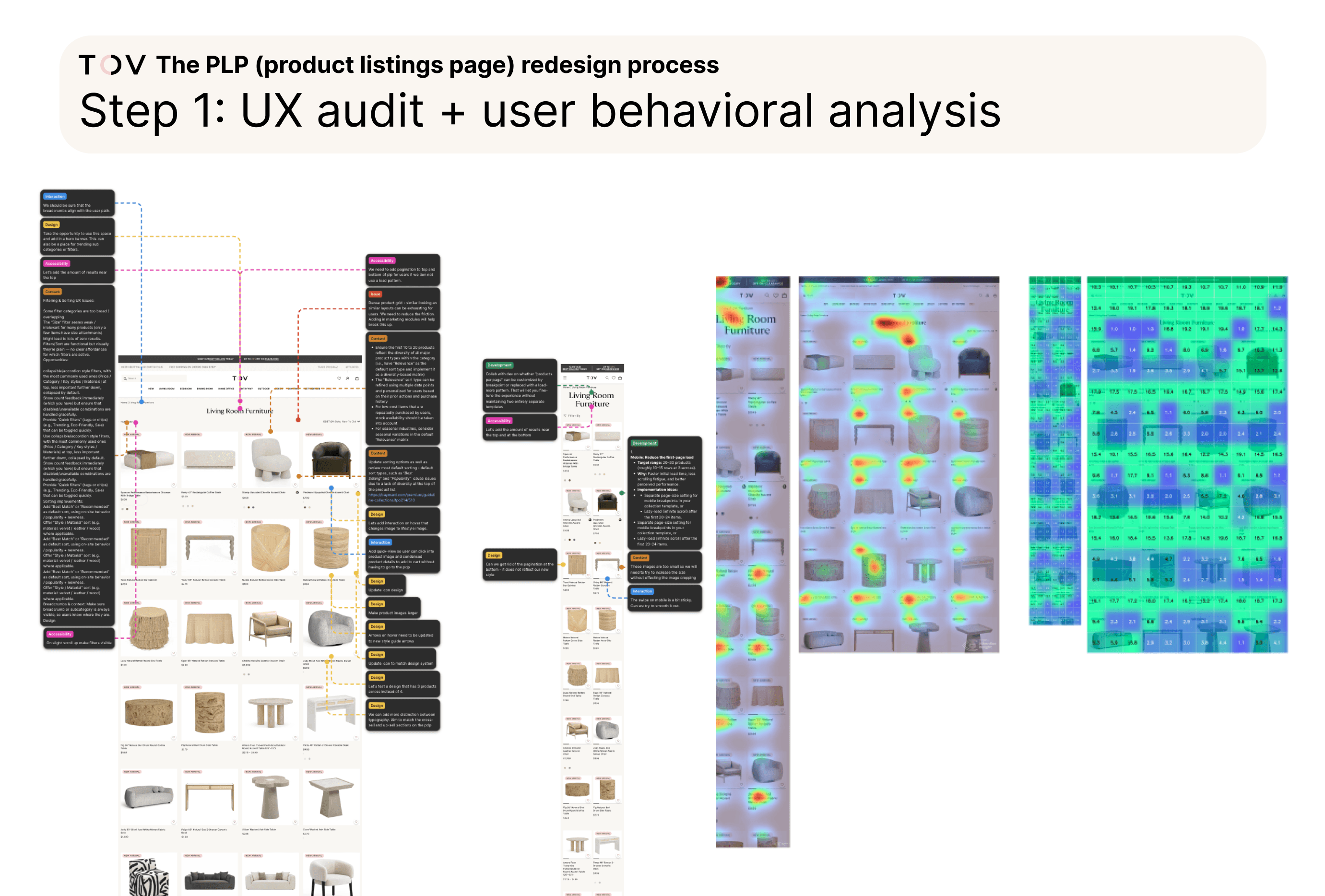
With stakeholder context established, I conducted a comprehensive UX audit of the existing PLP, annotating friction points, identifying optimization opportunities, and flagging priority areas for the stakeholders to review. Each annotation was tied to a specific user impact, giving the audit strategic weight rather than serving as a purely observational exercise.
This was followed by a deep-dive behavioral analysis using FullStory, examining heatmaps, focus maps, scroll depth, and individual session recordings. The behavioral data validated several audit findings and surfaced additional friction patterns that weren't visible through heuristic review alone, most notably, users abandoning sessions after engaging with filters that returned overly narrow or irrelevant results.
Competitive Analysis
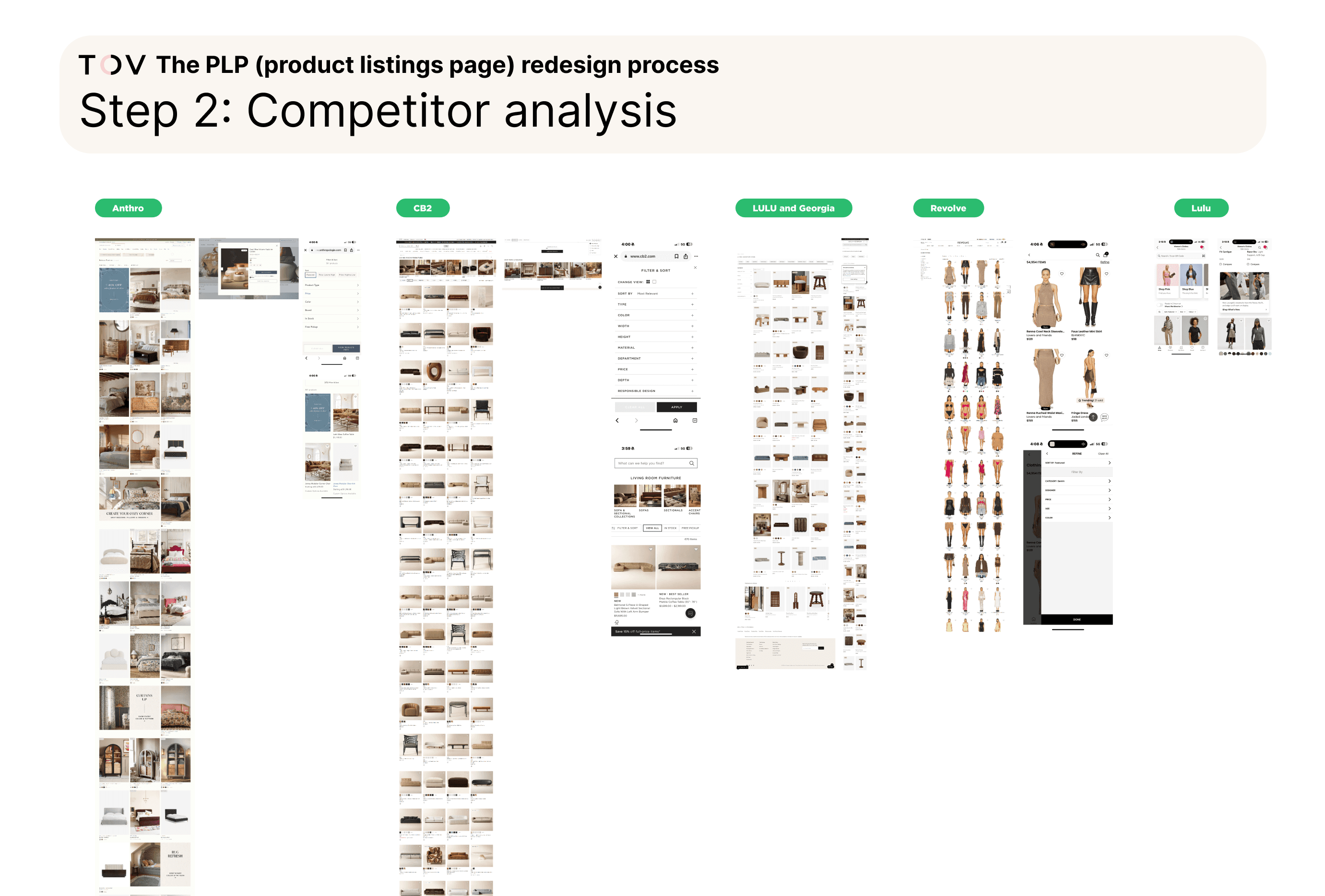
Given TOV's positioning as a top-trending brand, staying ahead of industry standards isn't optional, it's a brand imperative. A competitive analysis was conducted across two dimensions: within the furniture and home décor space, and outside the industry among brands targeting the same customer demographic.
The analysis focused on brands sharing TOV's target market, ensuring insights were directly applicable rather than broadly aspirational. Findings were compiled into a formal report presented to stakeholders, surfacing actionable patterns in PLP layout, filtering UX, quick shop functionality, marketing module placement, and product grid design, all of which directly informed the design direction.
Research Findings & Recommendations
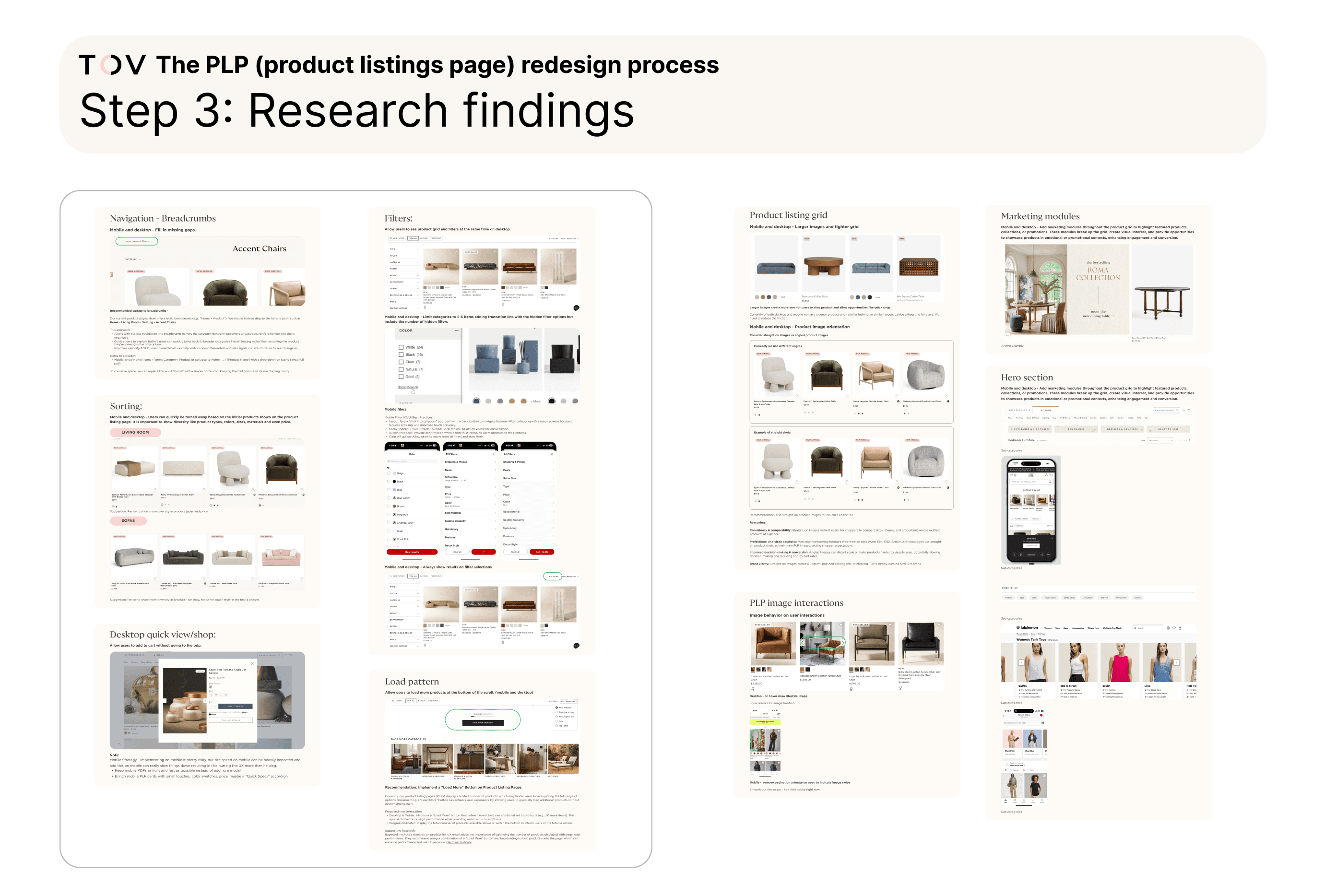
Following the audit, behavioral analysis, and competitive review, I synthesized all findings into a stakeholder presentation that outlined prioritized UX and UI recommendations, validated against industry benchmarks using resources such as the Baymard Institute to ensure decisions were both evidence-based and defensible.
UX recommendations included: implementing navigation breadcrumbs on the PLP, diversifying and improving product sort logic, introducing a Quick Shop interaction, revamping the filter system with category-specific filter sets, and replacing pagination with a progressive load pattern.
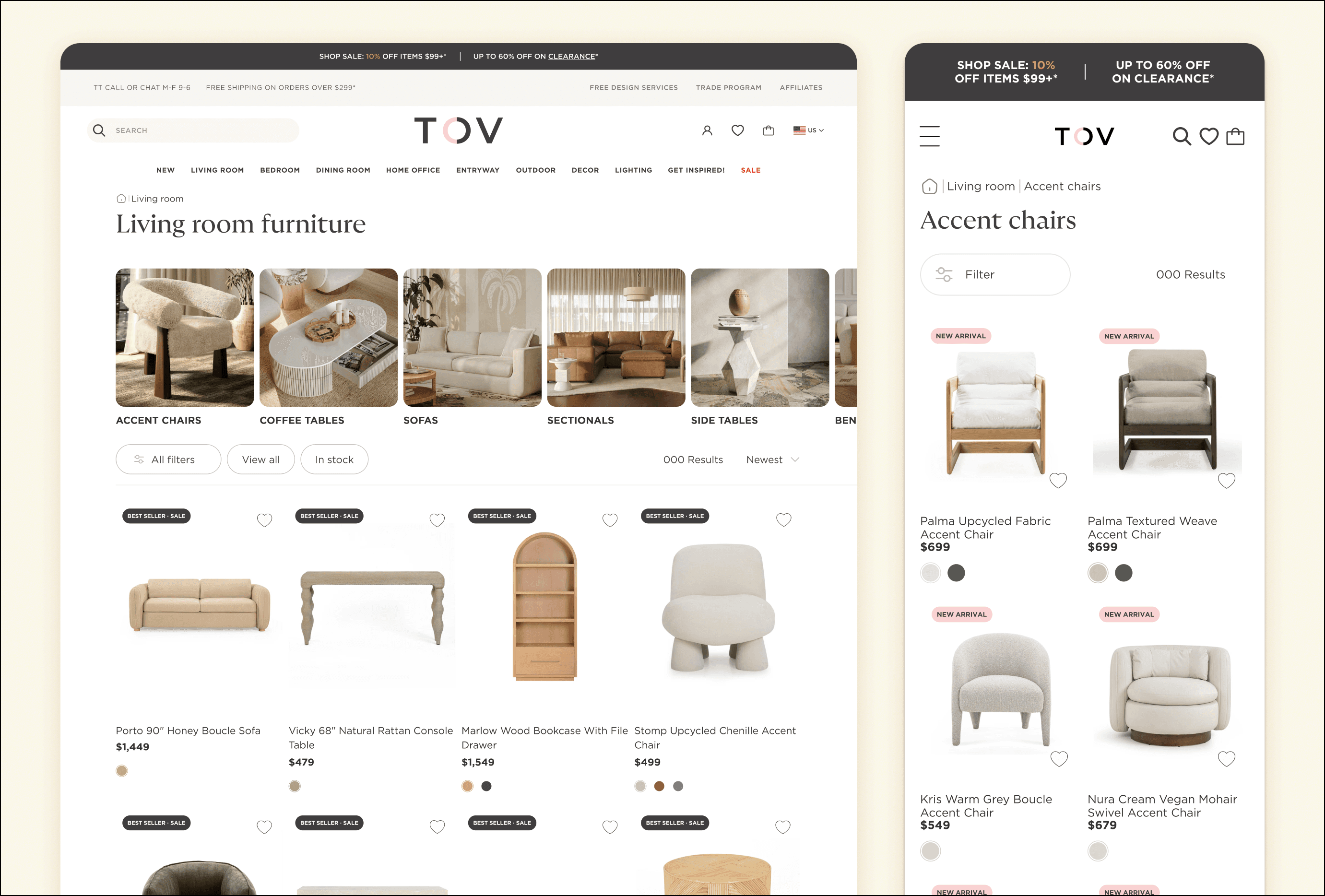
UI recommendations included: refining the product grid layout with optimized image sizing, standardizing product image orientation to consistent front-facing angles, introducing hover-state interactions on desktop and swipe animations on mobile, implementing marketing modules throughout the browsing experience, and adding a subcategory hero section to root-level category pages to improve wayfinding and discovery.
Project Roadmap & Phased Execution
With research validated and stakeholder buy-in secured, I developed a detailed project roadmap breaking the work into four clearly defined phases:
Phase 1 — Research & Documentation was completed in retrospect of the data, formally documenting the discovery process and establishing the rationale for every subsequent design decision.
Phase 2 — Low-Fidelity Wireframing focused on translating research insights into structural layouts. Working mobile-first, I developed wireframes that prioritized the core PLP interactions, filtering, sorting, the product grid, Quick Shop, and marketing modules. Multiple layout directions were explored before concepts were validated with stakeholders, ensuring alignment before any visual design investment was made. This phase was intentionally functionality-first, with particular attention given to breadcrumb navigation, sorting logic, Quick Shop behavior, progressive load patterns, and the filter architecture.
Phase 3 — High-Fidelity Design brought the validated wireframes to full visual resolution, incorporating TOV's brand language and the UI improvements identified during research.
Phase 4 — Development Handoff involved preparing a meticulously organized design file and leading a formal handoff meeting with the development team, walking through interactions, edge cases, and component behavior to ensure the build accurately reflected design intent.
Feature Spotlight: Quick Shop
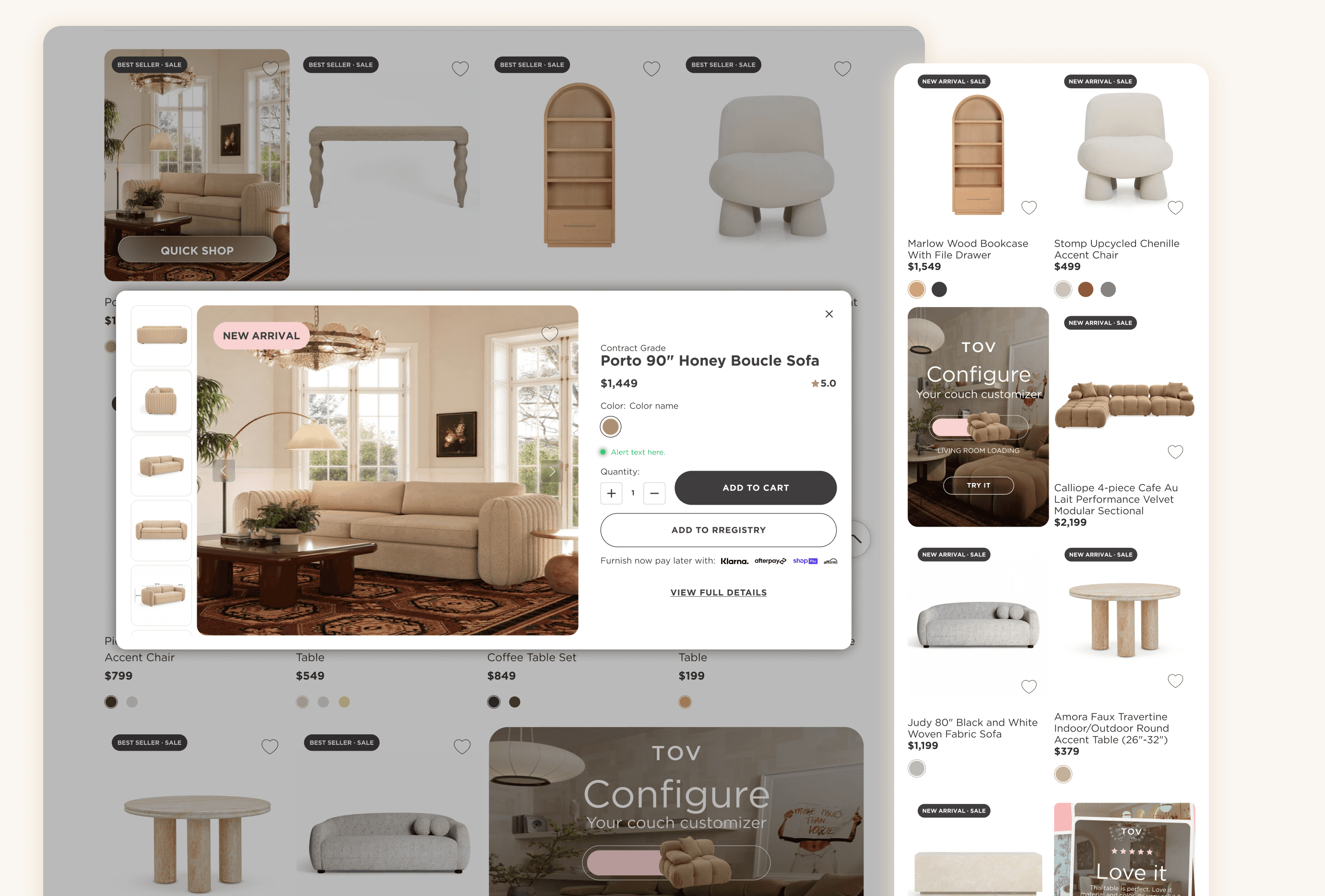
One of the highest-impact features introduced in this redesign was the Quick Shop functionality, which enables users to add products to cart directly from the PLP without navigating to a product detail page. This reduces the number of steps to purchase for high-intent users and keeps them within the browsing flow, a critical improvement for a category-driven shopping experience where discovery momentum directly influences conversion.
Outcomes & Impact
Post-launch behavioral analysis confirmed the redesign achieved its core objectives. Quick Shop saw meaningful adoption, with users actively converting from the PLP, validating the hypothesis that reducing steps to purchase would improve add-to-cart rates. Overall conversion rate showed improvement following implementation, and FullStory session analysis demonstrated a measurable reduction in friction points relative to the pre-launch baseline.
The project stands as a clear example of research-led design delivering quantifiable business impact, from a broken discovery experience to a high-performing, scalable PLP system built for conversion.